
Yoga has been a part of my life for as long as I can remember. When I think about yoga, the first image that comes to my mind is my parents. Because of them, I was introduced to this beautiful and life-changing practice at a very young age, both in theory and in practice.
At different stages of my life, the meaning of yoga has continued to evolve. It has never been fixed. Almost as if yoga itself grows and changes as we do.
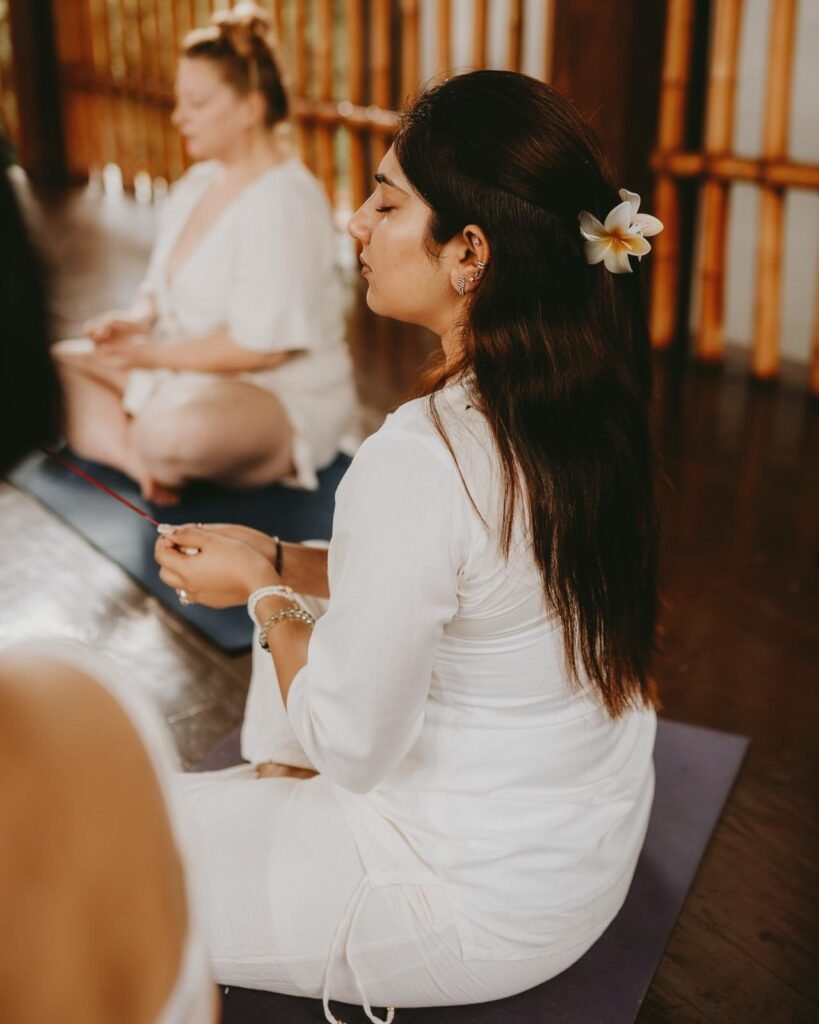
There were times when yoga felt like play and a fun time. At other times, it brought comfort and quiet happiness. In some phases, it became competitive, and in others, it felt like balance itself. But when I grew older and pursued yoga academically, the meaning shifted completely. That phase began with chaos and dejection.
Yes, dejection.
Very similar to what Arjuna experiences in the first chapter of the Bhagavad Gita, when everything he thought he understood suddenly collapsed. That sense of inner confusion and emotional paralysis was something I could deeply relate to.
Over time, as I studied various Indian scriptures and explored practices beyond physical asanas, something began to change. Yoga stopped being just a discipline I practiced and became an experience I lived. For the first time, the benefits described in ancient yoga philosophy were no longer abstract ideas. They became real.
Even in classical texts, yoga is defined in multiple ways. Sometimes it is described as control of the mind, sometimes as union, and sometimes as samadhi. On the surface, these meanings appear different, but at their core, they point toward the same state. Union with the Self. A dissolution of separation.
Why does yoga have so many interpretations? Because human beings themselves are diverse. And within one lifetime, a person transforms many times. The individual I am today is not the same person I was a few years ago. Naturally, each version of me has experienced yoga in a different way.
At this point in my life, yoga means simplicity.
I am aware that this understanding may change again in the future. But right now, yoga simplifies life for me. And by simplicity, I do not mean dividing life into right and wrong, or good and bad. Life is not black and white. There is a vast space in between, and that is where complexity exists.
What truly distinguishes human beings is the complexity of the mind. Our ability to think, judge, invent, and form moral frameworks. Yoga does not remove this complexity, nor does it make us less human.
So what does yoga actually do?
It cultivates awareness.
Through yoga, I have developed a deeper awareness of my own mind. I can observe how it reacts to situations, people, and significant life events. With this awareness, things begin to make sense. I can understand why people behave the way they do, and I can see the causes behind my own reactions as well.
Life continues to move in cycles. There are highs and lows, moments that disturb balance and certainty. But yoga has reduced the shock of these experiences. The fluctuations feel familiar now, almost rhythmic, rather than overwhelming.
In yoga philosophy, there is the concept of sthitaprajna, described in the second chapter of the Bhagavad Gita. It refers to a state in which one is not excessively elated by happiness nor deeply shaken by sorrow. From the outside, this may sound like a dull or emotionally detached way of living. But once experienced, it is anything but that.
The calm, balance, and clarity that arise from this state are deeply fulfilling. It is not numbness. It is steadiness.
At this stage of my journey, yoga has helped me see something clearly. I never truly lost control of situations in my life. The truth is, I never had control to begin with. And surprisingly, this realization has not weakened me. It has brought peace.
For now, yoga is this awareness that simplifies everything. It does not remove life’s complexity, but it allows me to move through it with clarity, acceptance, and ease.