The end goal of Yoga is liberation.
Moksha. Kaivalya. Freedom.
Which makes me wonder: does that mean, in some strange way, that the purpose of our lives is to set ourselves free?
And if that is true, then what exactly are we trying to free ourselves from?
Because most of us spend a rather impressive amount of time believing we are free.
We choose what to wear.
We choose what to eat.
We choose where to live.
We choose our careers.
We choose our relationships.
We have options. We have opinions. We have a very convincing sense of individuality.
And yet, if we look closely, how many of those choices are actually ours?
How many are made by our conditioning, our fears, our childhoods, our families, our societies, our past experiences and, if we are willing to go deep enough into philosophy, even the impressions we carry from lifetimes before this one?
So, are we actually free?
Or are we just very well-decorated prisoners?
Free will, or just very good conditioning?
There has always been a fascinating debate between free will and determinism.
I have spent a good part of my life somewhere irritatingly in the middle.
I believe our thoughts are deeply influenced by everything that has happened to us. Our childhood, our environment, our education, our relationships, our experiences, our fears, our desires. Even our understanding of ourselves is, in many ways, built from things that came before us.
And yet, I have always felt that there is something in us that can choose.
A small space. A pause. A possibility.
The possibility of responding differently.
Even if my personality has been shaped by everything I have experienced, yet I still have some degree of free will in every lifetime, the ability to change the direction of the person I am becoming.
Think of it this way: we are born with a certain set of conditions. The brain develops according to nutrition, genetics, environment, conditioning and experience. The mind collects impressions. It learns what to like, what to dislike, what to fear, what to chase.
But somewhere within all of that, there seems to be another faculty and that is the ability to discern.
In Yogic philosophy, there is a distinction between the mind and the intellect.
The mind reacts.
The intellect discerns.
The mind says, I want this.
The intellect asks, Is this actually good for me?
The mind says, They hurt me, so I must hurt them back.
The intellect says, No. This is not who I want to be.
The mind wants the immediate.
The intellect can see beyond it.
And perhaps that little space between impulse and action is where our freedom begins.
Maybe freedom isn’t the ability to do whatever we want.
Maybe freedom is the ability to choose who gets to make the decision.
My first definition of freedom
Growing up as a girl in Delhi, freedom had a very simple definition.
It was being able to decide what I wanted to do with my day without having to consider an entire committee of people.
My family. My friends. The crowd. Society.
The “what would people think?” department.
Freedom was being able to decide whether I wanted to be somewhere without having to ask.
Freedom was choosing my career.
Choosing what kind of person I wanted to become.
Choosing my clothes, my friends, my life, my mistakes.
And as I grew older, I understood something else:
Freedom is a privilege.
I never wanted to take it for granted.
But then Yoga entered my life.
Or rather I should say, I entered Yoga.
For a large chunk of my life, I was learning Yoga, practising Yoga, teaching Yoga, studying philosophy and, in no particular order, trying to understand what the hell it was actually asking of me.
And somewhere along the way, my definition of freedom changed.
I began to realise that the more we think we are free, the more we sometimes discover the ways in which we are trapped.
The irony of teaching freedom while feeling trapped
I taught the Yamas and Niyamas (the foundation, the moral values).
I taught discipline. I taught self-observation.
I taught students about the importance of not being controlled by every desire, every reaction, every thought.
I knew perfectly well that this wasn’t just some optional spiritual add-on to Yoga.
It was essential.
Because what is the point of having the freedom to choose if your mind is choosing everything for you?
I had all the information. I had the philosophy.
I had the practices. I had the discipline.
And yet somehow, I couldn’t always transform knowing into being.
And that hit me harder than I expected.
The more I taught, the more I compared myself.
The more I learned, the more I judged myself.
The more I understood about discipline, the more aware I became of all the ways I wasn’t disciplined enough.
There is a special kind of irony in teaching people how to free themselves while privately feeling like your own mind has you on a leash.
From the outside, I probably looked quite free.
I had chosen my path. I was teaching Yoga.
I could travel. I could teach philosophy.
I had built a life that, by many conventional standards, looked independent.
But internally?
I couldn’t have felt more trapped.
And eventually I had to ask myself a rather uncomfortable question:
If I am free to practise everything I believe in, but I am constantly punishing myself for not being perfect at it, am I really free?
I don’t think I was.
So I took a different path.
After years of struggling with that contradiction and self critical attitude, I decided to take a break from teaching Yoga.
Not from Yoga itself. That distinction matters.
I still want to learn. I still want to practise. I still love philosophy.
But I no longer want Yoga to become another instrument with which I beat myself up.
And that, too, is a form of freedom.
Knowing when something you love has stopped serving you in the way it once did.
Knowing when to step away without deciding that stepping away means you have failed.
And then came something rather funny.
I moved into materialism.
In full force.
I opened a women’s fashion boutique. Me.
A person who spent years talking about liberation, consciousness and the nature of the self,
now worrying about inventory, suppliers, barcodes, rent, margins and whether a skirt is going to sell.
Apparently, enlightenment comes with accounting.
And honestly?
I love it.
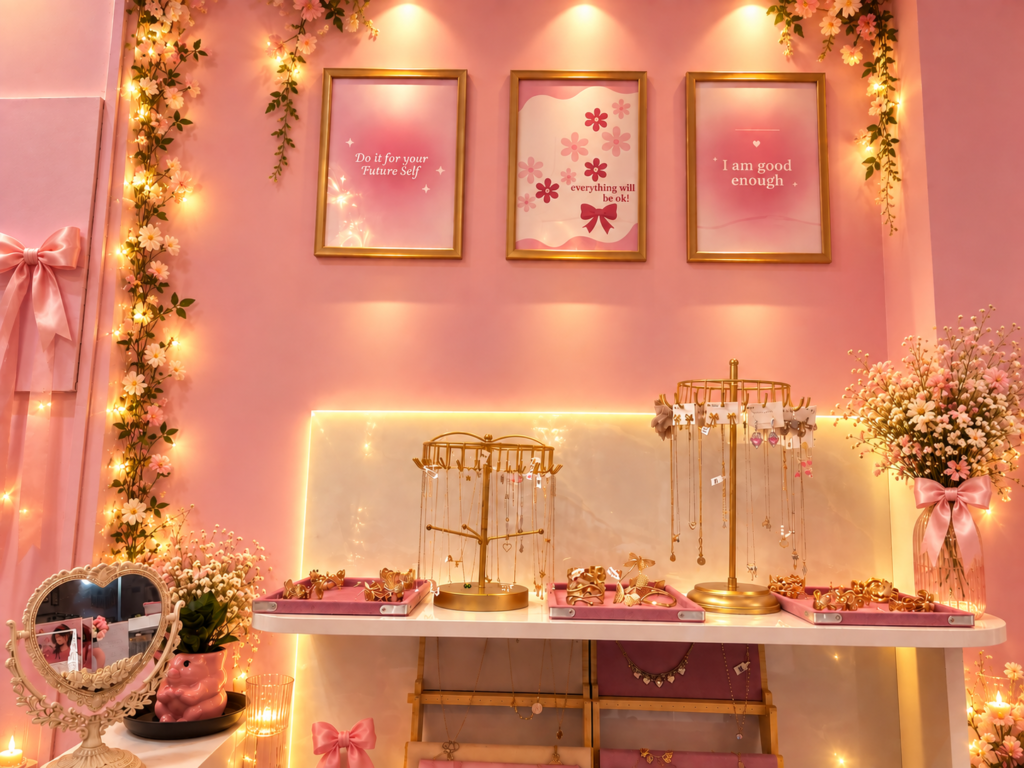
The boutique, the spiritual girl and the material girl
Opening my boutique has taught me a completely different kind of independence.
There is something deeply empowering about building something with your own hands.
Making decisions. Taking risks. Failing. Trying again. Earning. Spending. Learning.
Being responsible for something that exists because you decided it should exist.
But somewhere along the way, I realised I didn’t have to choose between the spiritual part of myself and the material part.
I could let them coexist.
So I started pouring little pieces of what I believe into the boutique.
Not loudly. Not preachily.
Just little bits of philosophy here and there.
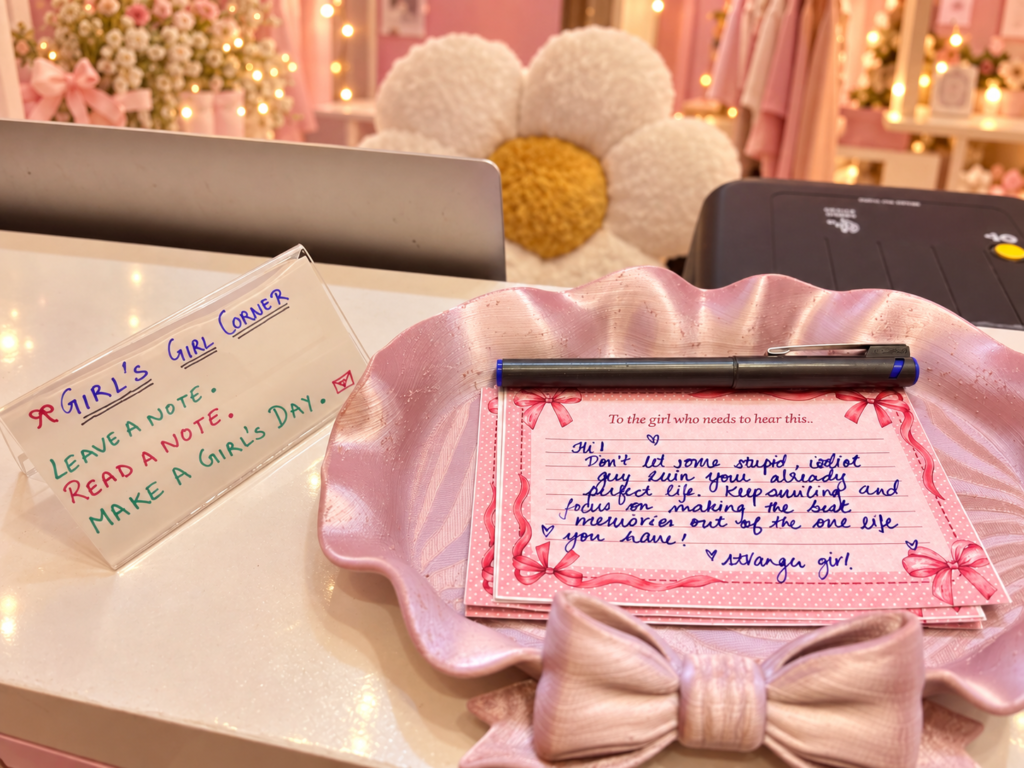
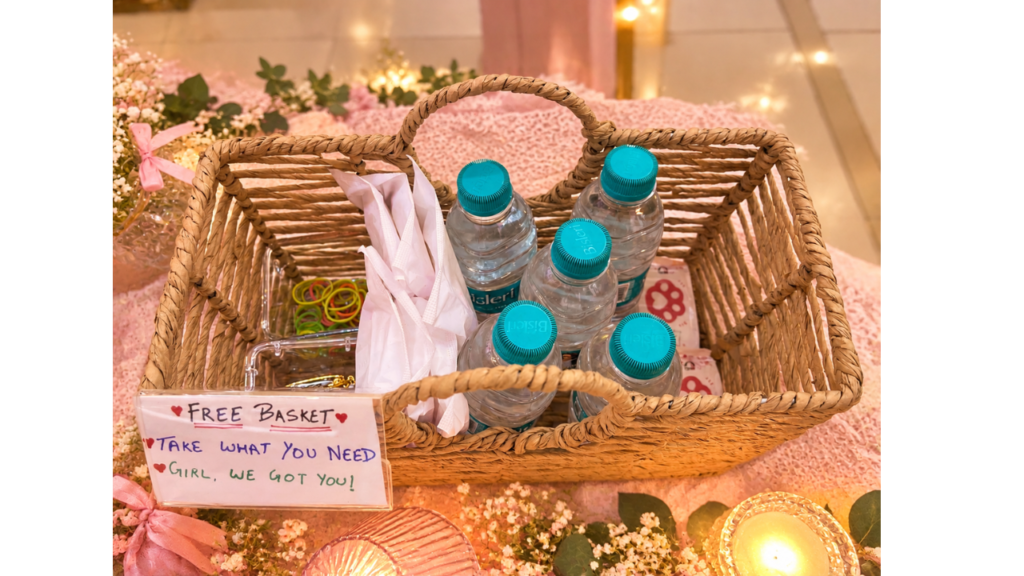
A safe space for girls.
A place where someone can come in, browse clothes, sit down, breathe, feel comfortable and leave feeling a tiny bit better than when she walked in.
Because maybe spirituality doesn’t always have to look like sitting cross-legged on a mat.
Maybe it can look like a girl trying on a dress.
Maybe philosophy can live next to a jewellery stand.
Maybe a space can be both beautiful and meaningful.
Maybe I don’t have to choose between the woman who studied liberation and the woman who enjoys a really good outfit.
Perhaps freedom is allowing both women to exist.
So, what is freedom to me now?
It isn’t simply doing whatever I want.
That version of freedom is easy.
I want a chocolate cake. I eat a chocolate cake.
Congratulations. I am free. Except I’m probably not.
Because if every impulse gets to dictate my life, then I haven’t escaped my mind. I’ve simply become very obedient to it.
Real freedom, I think, is something much more difficult.
It is being able to observe yourself honestly enough to know when you are acting from fear, conditioning, ego, desire, expectation or genuine choice.
It is having enough awareness to pause.
Enough courage to choose differently. Enough discipline to follow through.
And enough compassion to not hate yourself when you don’t.
For me, freedom today is not having to choose between spirituality and materialism.
It is allowing both sides of me to coexist peacefully and, more importantly, allowing both of them to thrive in their respective spaces.
It is being able to change careers without feeling like I have abandoned the person I used to be.
Because a career change isn’t always a departure. Sometimes it is an expansion.
The yoga teacher in me didn’t disappear when I became a boutique owner.
She simply stopped being the only woman allowed to drive. And maybe that’s what growing up is.
Not becoming one fixed version of yourself, but becoming free enough to let yourself evolve.
Perhaps we don’t need to find a purpose. Perhaps we need to live with one.
I used to think freedom meant finding the ultimate purpose of life.
And, in the grandest philosophical sense, liberation is exactly that, the ultimate freedom from the cycle of conditioning, attachment and suffering.
But on an ordinary Tuesday morning, when you have bills to pay and a shop to run and absolutely no idea what you’re doing next, at that time you don’t need to know the ultimate purpose of your life.
Maybe you just need to live with a purpose.
A small one. Today. Tomorrow.
For this season of your life.
Maybe your purpose right now is to build something.
Maybe it is to heal. Maybe it is to raise a family.
Maybe it is to leave a job. Maybe it is to start one.
Maybe it is to design clothes. Maybe it is to teach Yoga.
Maybe it is to do absolutely nothing for a while and figure yourself out.
We put so much pressure on ourselves to find the answer.
As though life is a multiple-choice question and there is one correct option hidden at the bottom of the page.
I believe life is much more generous than that.
We are given a little bit of free will, a little bit of time, a whole lot of conditioning, and the opportunity to work with all of it.
Freedom is not effortless
This is the part I understand differently now.
True freedom is not the absence of struggle.
It may actually require struggle.
Hard work. Self-awareness. Discipline. Failure.
The courage to question what you have always believed.
The courage to leave something even when everyone thinks you should stay.
The courage to stay when leaving would simply be an escape.
The courage to admit that something you once loved is no longer working.
And most importantly, the courage to build a new life without constantly apologising to your old one.
To be ultimately free may be the inevitable direction of life.
But until then, we have this little pocket of freedom.
This strange, precious ability to choose. To choose what we do today. To choose what we listen to.
To choose what we believe. To choose which parts of our conditioning we keep and which ones we question. To choose who we become next.
And that is enough. For now.
So, to you reading this:
I hope you find your freedom.
I hope you question the cages you have been taught to decorate.
I hope you notice the ones society built for you, the ones your family built for you, the ones your career built for you, and, the hardest of all, the ones you built for yourself.
And I hope you don’t feel the need to become someone entirely different to escape them.
Pick something. Anything.
A career. A relationship. A dream. A pair of ridiculous shoes. A spiritual practice. A completely impractical business idea.
And let it coexist with the other parts of you.
You don’t have to choose between being spiritual and being material.
Between being disciplined and being playful. Between who you were and who you are becoming.
Between the life you imagined and the life you actually have.
Maybe freedom is simply having enough space within yourself for all of it to exist.
And, after all these years of trying to understand liberation, this is where I have arrived:
Freedom is not becoming free from life.
It is becoming free enough to live it fully 🙂